The aviators route
A walk in the lands of the Carraresi

Aggiornato al 14 February 2018
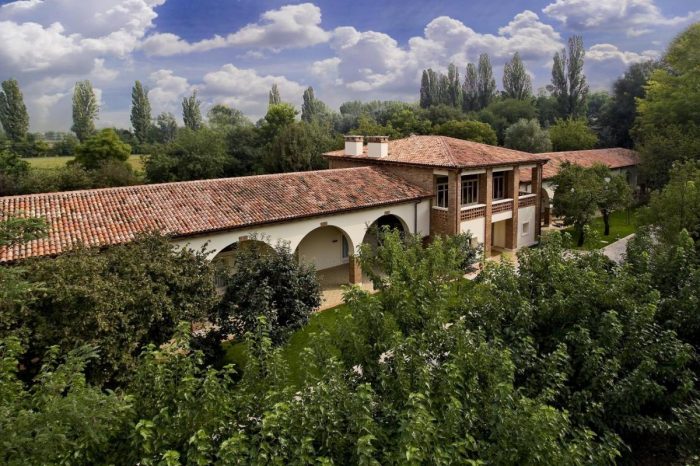
The first itinerary is dedicated to two important pioneers of the skies: the baron Leonino Da Zara and the poet Gabriele D’Annunzio. Their history actually is linked to two sites crossed by the path: Ronchi del Volo, in Casalserugo, which takes its name from the deeds of the baron Da Zara and the Castle of San Pelagio, from where the planes of the “flight over Vienna” and the poet Gabriele D’Annunzio took off in August 1918. Indeed there are several sites of interest you’ll come across along the 37 kilometers, better cycling and with good weather, to enjoy the countryside around left virgin for large tracts and furrowed by many courses and rivers along which small villages have developed. Villages such as Pontemanco, a medieval craft center built around a forceful small waterfall, or the beautiful villas of which Veneto is famous for as Villa Grimani and Villa Sperandio, also in Pontemanco, Villa Capodaglio, in nearby Due Carrare, or Villa Petrobelli in the village of Ca ‘Murà.
Here you cross the canal and continuing right after the few houses you will meet the cycle path that, along the road coming from Maserà, leads to the center of Due Carrare. Continuing, after the Church of San Giorgio, a little further on the right side, take Via Figaroli: at its end take via San Pelagio which, to the left, leads you past the overpass to the well-known San Pelagio castle. From here took off the famous italian poet Gabriele D'Annunzio for his historical enterprise "flight over Vienna" (9 July 1918). After leaving the castle, turn right at a restaurant and continue along the SP road n. 30 on the cycle path and then, shortly after, turn left into via Vo' di Placca, skirting the village of Terradura and the parish church of the Immaculate Conception. Then take the first road on the right (Pagano Mobili signboard) and after a couple of curves via S. Giustina, on the left. Then enter via Bolzani: pass the overpass to the right, taking the small road on the left that is right at its feet, you will get into the headquarters of the Consortium of Radicchio di Maserà. Carrying on along Via Bolzani, you will find the Caseificio Salvò and finally the Conselvana road which leads to the center of Maserà on the right.

Continue along the road heading north towards the ancient village of Bertipaglia and the ancient Church of S. Mariano: go back and turn left into via Ronchi that then deviates to the left. You will reach the fourteenth century church of Ronchi del Volo, then you keep left on Via San Martino, arriving at the gates of the village named Casalserugo. When you get to the 14th century Villa Ferri, known as Castello di ser Ugo, you can bypass the center of the town turning left and straight right (through via Isonzo, via Firenze, left again in via Orsati and right in via Rialto).
You then reach the SP 3, which you cross into via Gruato and which it leads to the embankment of the Bacchiglione in the Roncajette area. Follow the embankment to the right for a long stretch until you cross via Bersaglio on the right, before a large dewatering pump. Proceeding on via Bersaglio, you pass the Ai Prà dairy in via Patriarcati and follow the right bank up to the Vigenzone canal that crosses the Conselvana road near the Cagnola village and arrives, after a few kilometers, to the ancient village of Pontemanco.
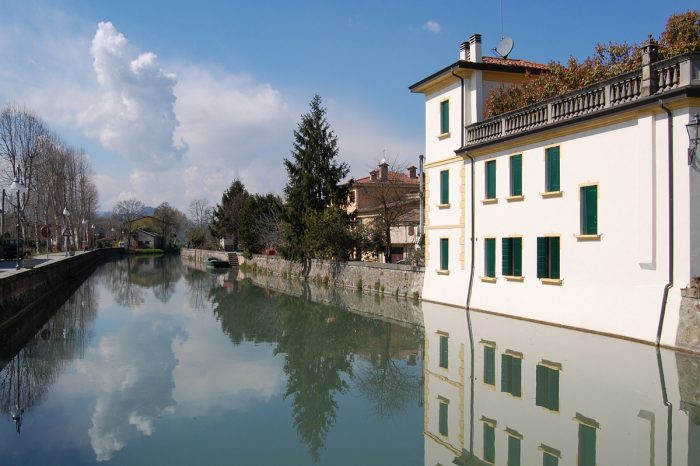
The itinerary begins in the center of Maserà di Padova. Starting from the car park in Piazza del Municipio, in front of the GD Telephony Center, follow the Conselvana road (SP 92) towards Conselve, where on the left you will find the Enoteca Cominciamo dal Vino, the Ristorante Pizzeria Sei per sempre and on the right the Ortofrutta Scarabello. Further, after a few meters, on the cycle path, that runs along the left roadway, you pass the artisan industry area, turn left into via Foscolo and go into the Paduan countryside. Following via Gasolina (on your right) and via Ca' Murà (on your left) you reach the little village of Ca' Murà with Villa Petrobelli and the Church of S. Stefano.